As part of the 2026 indigenous Women Educators Award process, the recognition of this year’s six recipients contrinued within their own communities. Following the earlier announcement of the 2026 Indigenous Women Educators Award, local ceremonies in the Philippines, Uganda, Mexico, Costa Rica, India, and Peru honoured Ayu Jonah Ibia, Peace Kakete, Mari Sandra Espinoza Guzmán, Rugia Atencio Rodríguez, Mini Karimam, and Betty Roxana Muñoz Agustin. This award celebrates indigenous women from across ILED network who play an important role as educators and in passing on knowledge, both within and beyond formal educational settings. As part of the award process, each recipient receives a €1,000 prize and a commemorative token, presented during a ceremony in their own community. Read more about the Indigenous Women Are Educators initiative and why it was created here.
Each of these celebrations took its own form, reflecting the traditions and contributions of the women being honored. The ceremonies celebrated not only their individual achievements, but also the communities and relationships that support their work. At a time when many Indigenous communities continue to face challenges in protecting their rights, culture, and ways of life. Giving greater recognition to these women helps ensure that their contributions are seen, valued and carried forward.
Salumayag Youth Collective for Forests (Philippines): Celebrating Ayu Jonah Ibia
Ayu Jonah Ibia receiving her award in the Philippines. Photo: Salumayag Youth Collective for Forests.
Indigenous Women Educators Award offered a special moment for Ayu Jonah Ibia’s family and community in Bukidnon to recognise her years of dedication and leadership. Together, they celebrated the knowledge, care, and commitment she has brought to her community over the years. Ayu serves as president of the partner farmers of Salumayag Youth Collective for Forests and leads the Bukidnon Seed Stewards Project, strengthening food sovereignty through community seed saving. Her work supports Indigenous farming practices and the knowledge connected to seeds, food, and the land.
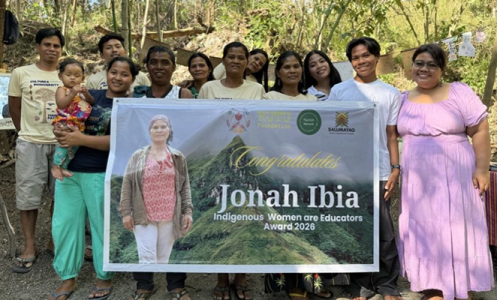
On 5 April, more than seventy community members gathered alongside Ayu’s family at the Salumayag Learning Centre in Quezon, Bukidnon. Community elders opened the ceremony with a ritual of gratitude. Throughout the day, stories were shared, meals were enjoyed together, and laughter filled the gathering. Ayu’s recognition has since reached beyond her community. In August MindaNews featured Ayo and her work, highlighting her as the only Filipina among this years Indigenous Women Educators Award recipient.
As Robert Mansalo-on Cahapon from Salumayag reflected:“It felt like what a community is supposed to feel like; people coming together not only to celebrate someone, but to honour relationships built through time.”
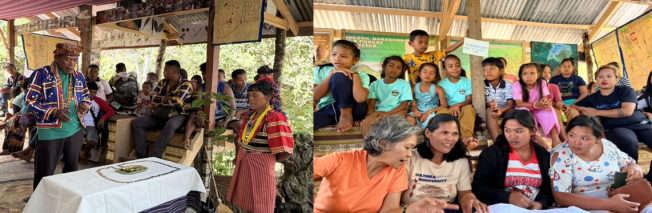
Community members gather for Ayu Jonah Ibia’’s local award ceremony in Quezon, Bukidnon.
Friends with Environment in Development (Uganda): Celebrating Peace Kakete
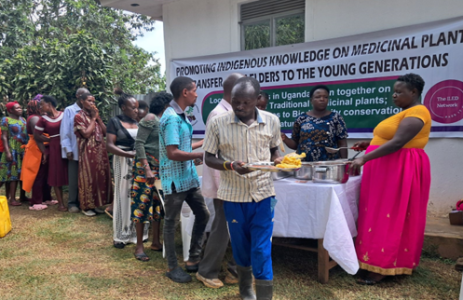
For the community in Kibasi Parish, 16 May was a moment to honour Peace Kakete and her contribution to Indigenous-led education in western Uganda. Peace is one of the Indigenous women leaders of the Kigando Bulera community and works with Friends with Environment in Development (FED). Her work focuses on preserving and sharing knowledge of medicinal plants and foods among Batooro communities, connecting Indigenous education with community wellbeing. During the ceremony, Elizabeth Rwamenge, President of the district’s Rotary Club and an advocate for local women, presented the award to Peace. In her remarks, she also acknowledged the women and members of the Kibasi community whose efforts help keep Indigenous knowledge in practice and ensure it continues to be shared. The day ended with a shared meal, bringing those present together to celebrate Peace and her work.
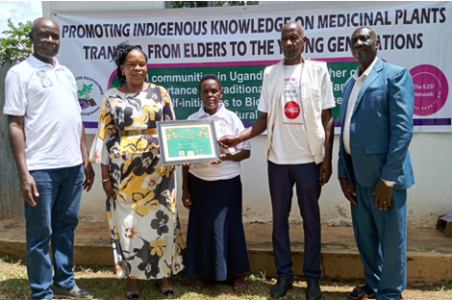
Peace Kakete’s award ceremony in Kibasi Parish, followed by a shared community meal. Photo: Friends with Environment in Development (FED).
Bari Wesna (Peru): Celebrating Betty Roxana Muñoz Agustin
On 19 July, Bari Wesna held a community ceremony in honour of Betty Roxana Muñoz Agustin, celebrating her work in bilingual intercultural education and her commitment to Shipibo-Konibo knowledge and culture. Bari Wesna has worked alongside the Shipibo-Konibo, Asháninka, and Yanesha peoples in the Peruvian Amazon for more than eleven years. Betty’s work reflects this close connection between education and culture. As a bilingual teacher, she develops culturally relevant learning for Indigenous children and shares knowledge of traditional medicine, songs, and cultural practices with younger generations through Bari Wesna’s Cultural Revolution Program.
Reflecting on Betty’s recognition, Bari Wesna shared: “This important recognition highlights her tireless work in preserving, practising, and passing on the cultural knowledge of her people, as well as her commitment to educating new generations through intercultural education.”
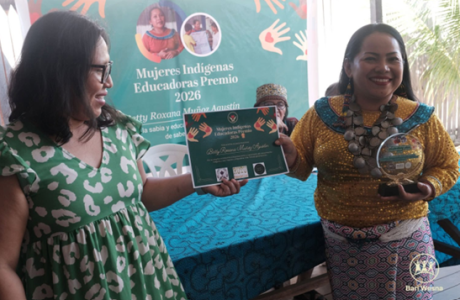
Betty Roxana Muñoz Agustin receiving her commemorative award during the local ceremony in Peru. Photo: Bari Wesna.
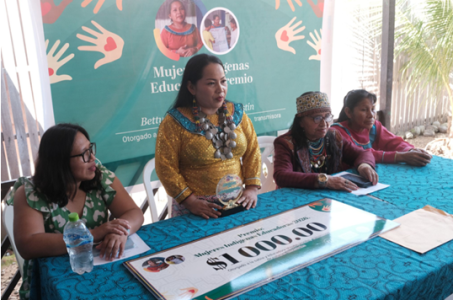
The ceremony celebrated not only Betty’s dedication as an educator, but also her role in ensuring that language, traditional healing practices, and cultural knowledge continue to be valued within her community.
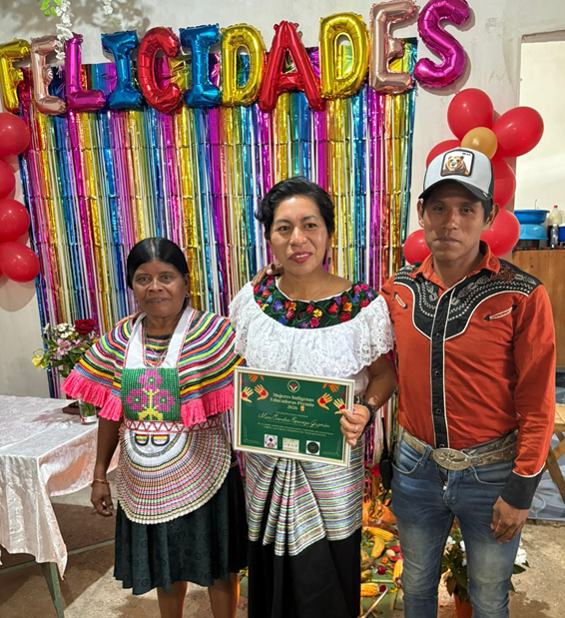
Lekil Lum (Mexico): Celebrating Mari Sandra Espinoza Guzmán
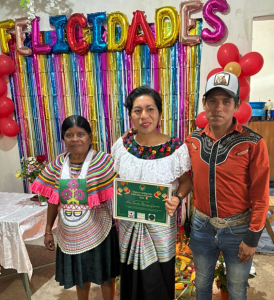
Mari Sandra receiving the award. Photo: Lekil Lum (Mexico).
Building bridges between traditional knowledge and today’s challenges has been at the heart of Mari Sandra Espinoza Guzmán’s work for many years. As a member of the Tzeltal Indigenous people of Chiapas, Mexico, she works with women’s and men’s collectives to strengthen local organizations, protect native food species, and promote sustainable ways of caring for the land. By bringing people together around these efforts, Mari connects long-standing knowledge and practices with the challenges communities face today.
In May, Lekil Lum celebrated Mari and her years of dedication with a local ceremony in Chiapas. The gathering marked her contribution to her community and the initiatives she has helped strengthen over more than a decade.
Asociación Roga (Costa Rica): Celebrating Rugia Atencio Rodríguez
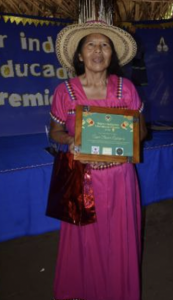
Rugia Atencio Rodríguez of the Ngäbe people of Costa Rica receiving her award.
For Rugia Atencio Rodríguez, education became a way to open doors that had long remained closed. As the first Ngäbe woman to complete both high school and university, she went on to become a teacher appointed by Costa Rica’s Ministry of Public Education. Rugia also played an important role in “The Fight for Identification Cards,” an initiative that contributed to the recognition of Ngäbe people as Costa Rican citizens. Her journey therefore reflects not only her own determination, but also years of working for greater recognition and opportunities for her community.
On 23 May, Asociación Roga came together to honour Doña Rugia and the path she has created for others. Her influence was captured in the words shared during the celebration: “Doña Rugia is the woman who forged a path in the face of discrimination. Her love for our culture has been a source of inspiration for many of us. I wish you a long life, Doña Rugia!”
Keystone Foundation (India): Celebrating Mini Karimam
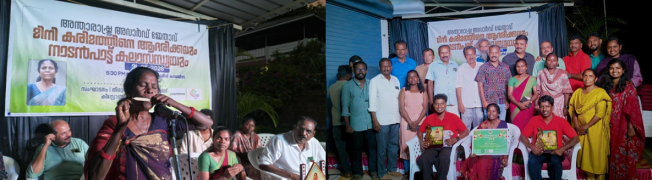
Mini Karimam receiving her award alongside community members. Photo: Keystone Foundation.
Music lies at the heart of Mini Karimam’s contribution to her community. From the Adiya Rahular Indigenous community of Thirunelli in Wayanad district, Mini carries with her the tradition of Cholappaattu, a musical form deeply connected to community life.
Her knowledge of Cholappaattu was not learned from books, but through listening, observing, and taking part in community life. Passed on orally by elders, the songs became part of Mini’s own lived experience. Within the community, Cholappaattu has served different purposes over time, from emotional support and healing practices to early childhood learning. Today, Mini continues to sing and practise the tradition, carrying forward what she once learned from those before her. On 31 May, this dedication was recognised in Mullankolly, Wayanad, where Mini received her Indigenous Women Educators Award. She was honoured alongside State Folklore Academy Award recipients Rakesh E.R. and Binu C.K., making the day a wider moment of recognition for cultural knowledge and practice in Wayanad.
Conclusion
All these women share a commitment to strengthening their communities, each in her own way and within her own cultural context. The local ceremonies offered an opportunity to celebrate this work close to home, together with the people who are part of it. Taken together, these moments show that Indigenous education is a living practice, shaped by people and evolving across generations.