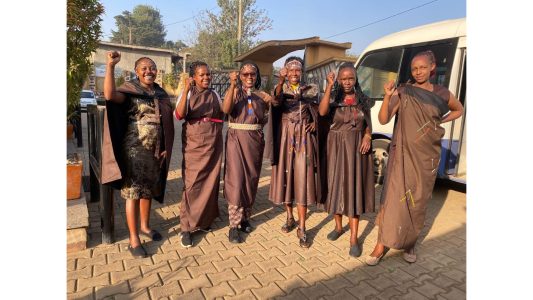
On March 8th, International Women’s Day 2026, the Indigenous-led Education (ILED) Network is launching the second edition of the #IndigenousWomenEducators campaign to honour, celebrate and spotlight women from our network who play extraordinary roles in passing on knowledge, whether in formal or informal educational settings. We are proud to present our seven awardees of 2026!
The award and the process
The ILED ‘women are educators award’ includes a €1000 monetary prize and a commemorative token, which will be presented in each winner’s community during a celebratory ceremony. In addition, the winners are featured in a dedicated campaign that spotlights their achievements and the vital roles they play in their communities – both in local news and media, and on the global stage. During the first round of this campaign the local coverage attracted the attention of media outlets and policy-makers, creating a ripple effect of wider recognition and interviews.
The 2026 nominations were invited through a call circulated among network members and supporters. The applications were carefully reviewed by a small group of ILED secretariat support team members, including regional facilitators, and evaluated based on their alignment with the award’s objectives , as well as timing and regional balance. This process resulted in the selection of seven inspiring winners.
Over the coming month, we will be sharing online posts that highlight the stories of our winning Indigenous women educators in greater detail!
Indigenous Women are Educators: our 2026 winners
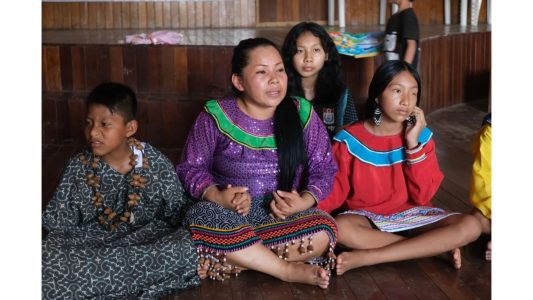
1): Betty Roxana Muñoz Agustin (40)
Shipibo-Konibo (Pucallpa, Peru)
This nomination was submitted by the Bari Wesna institution:
“Betty’s teaching work, her ancestral wisdom, and her community leadership make her an invaluable transmitter of knowledge, whose work transforms lives, strengthens culture, and paves the way for future generations”.
About Betty:
Betty has worked for several years as a bilingual teacher, developing educational practices that are relevant and meaningful for the children in her community. Likewise, her experience as a trainer at a bilingual pedagogical institute demonstrates her commitment to preparing new professionals who can continue strengthening Bilingual Intercultural Education (EIB). Her role is not limited to teaching; she also inspires future generations of educators to value and defend their cultural roots. In addition to her teaching work, Betty is recognized as a wise woman in her community. She masters the use of traditional medicine for healing the body and spirit through ayahuasca ceremonies and songs that balance and regulate emotions. This wisdom, passed down through generations, she shares with children, adolescents, and young people in the workshops promoted by Bari Wesna as part of their Cultural Revaluation program.
In these spaces, she teaches the value of traditional medicine as a fundamental pillar for the health and identity of the people, showing how this knowledge can save lives and strengthen emotional well-being. Her songs not only have a spiritual effect but also become a bridge for the practice and preservation of the native language. Through them, participants learn to value their language as an expression of identity and collective memory. Likewise, Betty stands out as a natural leader. She currently holds the position of vice president in one of the most populated communities of the Shipibo-Konibo people, a role historically reserved for men. Her election reflects recognition of her management skills, community commitment, and vision for development. This leadership sets a precedent for the participation of women in decision-making and political empowerment spaces within the indigenous community.
Reflections of the selection committee:
“Betty brings together education, ancestral healing knowledge, and community leadership in a remarkable way. Her work as a bilingual teacher and knowledge holder, as well as her being in leadership roles is especially interesting. Betty brings a community-wide leadership and ancestral knowledge practice that extends beyond the classroom into governance, healing, and women’s empowerment”.
2) Mari Sandra Espinoza Guzmán (36)
Tzeltal Indigenous Group of the native peoples of Chiapas, Mexico.
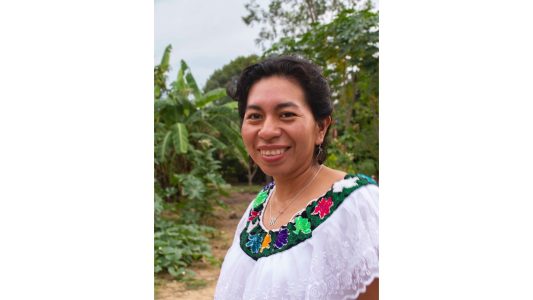
This nomination was made by Lekil Lum:
“As our advisor, Mari Sandra encourages us to strengthen ourselves as community promoters to share with other communities and peoples in order to enrich our skills and experiences, and to share among women, families, and communities the teachings of our ancestors and our collective learning.
With the documentation of our achievements and learnings, it has boosted our involvement in the creation of audiovisual materials to be used as a tool for the conservation, dissemination, and awareness of our cultural practices in the care and defense of our territory”.
About Mari:
From her Tzeltal indigenous identity, Mari Sandra has spent more than 10 years supporting women’s and men’s collectives in strengthening their organizational and productive capacities. Through a community-focused approach that emphasises care for Mother Earth, she works to improve the living conditions of families and communities. Her work as a technical advisor in developing agroecological practices and promoting productive initiatives to address environmental problems caused by climate change—which threaten the community’s food supply—has guided communities toward collective action. This work encourages the equal participation of women and men in implementing strategies that reduce the loss of food species diversity in the milpa and harmful practices that pollute the environment and damage human health.
Through her work as a community educator, Mari promotes the exchange of ancestral knowledge, highlighting the role of wise women as bearers and transmitters of knowledge to new generations. She facilitates dialogue in her native Tzeltal language and incorporates community ceremonies of respect and practices of connection with nature in the cultivation of the land. This approach helps the community preserve native plants that are part of ancestral food systems and traditional medicine, which form an essential part of their identity and cultural heritage as Indigenous peoples.
Reflections of the selection committee:
We are deeply impressed by her leadership, clarity, coherence, and her strong ability to articulate ideas. She has guided the people in her territory with a firm and committed vision, promoting initiatives that integrate ancestral Tzeltal knowledge with technical knowledge in defense of Mother Earth. Mari Sandra perfectly embodies what this award seeks to highlight. She is a representative of the Tzeltal people who embodies with dignity, conviction, and coherence the values of her community, bridging tradition and contemporary action in favor of life, territory, and women.
This candidate is so visionary, hardworking and passionate. To see that she is not working with only women to address women issues but critically involve the men in the community is a critical skill in gender issues.
3) Ayu (Auntie) Jonah Ibia (47)
Manobo-Kulamanen, the Philippines.
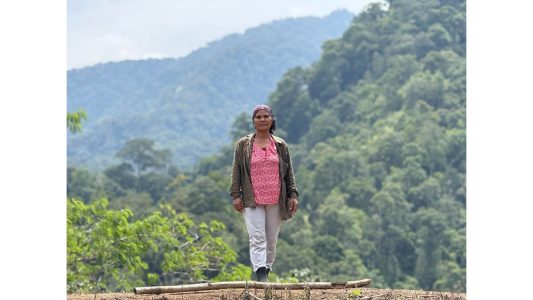
This nomination was made by Salumayag Youth Collective for Forests:
“We respectfully nominate Ayu (Auntie) Jonah Ibia for the 2026 ILED Women Educator Award in recognition of her leadership as an educator, culture bearer, and knowledge transmitter within her community in Sumuna, Quezon, Bukidnon. We call her Ayu Jonah as a sign of deep respect, not only for her age, but for the wisdom, care, and quiet strength she brings to collective work. From the very beginning of our forest restoration initiative, Ayu Jonah has been present and committed. She comes from a difficult background, navigating life as a mother in a community affected by long standing pressures from armed conflict and economic insecurity. Despite these challenges, she chose to rise above survival mode thinking and instead lead with a long term vision rooted in care for the land and future generations”
About Ayu (Auntie) Jonah Ibia:
Ayu Jonah stands out because she leads by example. While monetary opportunities often distract community decision making, she consistently chose to believe that what she nurtures today – healthy forests, seeds, and knowledge – will benefit her children and grandchildren. This perspective has made her a strong advocate for placing women at the center of planning and decision making processes, even in spaces where women’s contributions are often overlooked or go unrecognized by male leadership.
As an educator, her classroom is the landscape itself. She has planted hundreds of native trees along her farm boundaries, turning her own land into a living demonstration of culture-based forest conservation. Through her actions, she has encouraged other mothers and youth to take part in restoration, seed saving, and agroecological practices. Her work shows that learning does not always come from formal institutions, but from consistent practice and shared experience.
Initially, Ayu Jonah felt intimidated and afraid to participate in technical training on forest management, agroecology, and seed stewardship, yet she took a leap of faith. Today, she is no longer just a participant. She is a trainer, mentor, and resource person, especially for young people. She now represents the organization in community dialogues, academic spaces, and broader platforms, confidently sharing grounded knowledge shaped by lived experience. Ayu Jonah’s journey embodies the power of women as educators and stewards of intergenerational knowledge. Her leadership reminds us that true education is not only taught. It is lived, shared, and passed on through care, courage, and commitment.
Reflections of the selection committee:
“Ayu Jonah comes across as a good mentor for the youth and great candidate for the award. She is in the right position and age to bridge the gap between the elders and the youth while also bringing in new technology from outside that helps the community.”
“Her leadership is distinguished by coherence, integrity, and an intergenerational vision that prioritizes collective well-being and the safeguarding of living heritage. Her commitment to sustainability, expressed through the protection of forests, seeds, and knowledge, is complemented by her own story of resilience, inspiring women’s participation in planning and decision-making spaces”.
4) Rugia Atencio Rodríguez (59)
Pueblo Ngäbe de Costa Rica
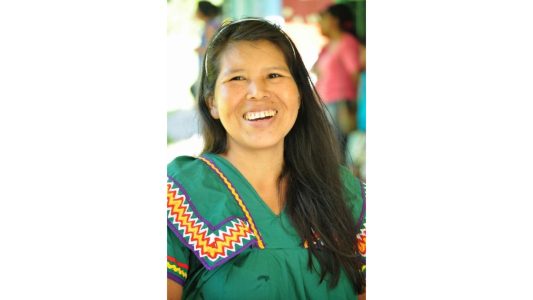
This nomination was made by Asociación Indígena Roga (Junta Directiva de Roga):
“Our nominee, Rugia Atencio Rodríguez, is a Ngäbe woman whose life story is an example of perseverance, resilience, and love for knowledge. For the Ngäbe people, talking about Rugia Atencio Rodríguez is talking about perseverance, resilience, and the power of knowledge. Her story is deeply enriching and admirable, and represents a living legacy for present and future generations.
About Doña Rugia:
In 1976, Doña Rugia began her primary education, walking approximately four hours each day to and from school. She attended barefoot and without understanding the Spanish language, facing multiple challenges inherent to her social and cultural context. Despite these obstacles, Mrs. Rugia successfully passed her first year of school, which awakened in her a deep curiosity and desire to excel academically. She continued her studies until completing sixth grade at her community school, El Progreso. Later, her father decided to send her to San José, even though she did not understand the world of the city. Nevertheless, her desire to learn was stronger than her fear and uncertainty. In the capital, Doña Rugia worked as a domestic worker during the day and studied at night, successfully completing her secondary education. Later, she continued her university studies, becoming the first Ngäbe woman to finish school, high school, and university.
In 1986, she was appointed as a teacher by the Ministry of Public Education. During her first five years of work, she received very little pay because the Ngäbe territory lies along the border between Panama and Costa Rica, and the Costa Rican government considered her a foreigner. Faced with this injustice, Doña Rugia, with the support of parents, initiated a process that is now known as “The Fight for Identification Cards,” which culminated in 1992 when the Ngäbe people finally obtained Costa Rican identification cards. Despite being assigned to teach five basic subjects, Doña Rugia always found time to teach Ngäbe culture, conveying to her students the importance of preserving and protecting cultural roots, as a fundamental foundation for projecting themselves and conquering the world from their own identity.
Reflections of the selection committee:
“It is important to highlight Doña Rugia’s resilience and capacity for agency, deeply rooted in her Ngäbe cultural identity, as well as her vocation for service, which have enabled her to generate processes of historic significance that led to the legal recognition and dignification of her people in Costa Rica. This case is especially meaningful in a political context historically dominated by patriarchy, where women’s participation and leadership are often questioned. Doña Rugia embodies in real life the matriarchal heritage of the Ngäbe people”.
“Her role as an educator, combined with her leadership in securing legal recognition for the Ngäbe people is inspiring!! Her work is so befitting this award, especially since she seems like a highly motivated individual who will be encouraged with this recognition:”.
5) Mini Karimam (63)
Member of the Ravula (Adiya) Indigenous community, Thirunelli, Wayanad District, Kerala, India.
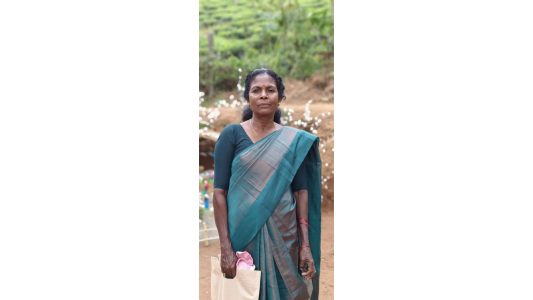
Nominated by Keystone Foundation:
“Mini, a 63-year-old woman from the Adiya Rahular Indigenous community of Thirunelli in Wayanad district, is a distinguished bearer of traditional knowledge and a living example of Indigenous women’s role as educators.”
About Mini:
At present, Mini is the only known practitioner in Wayanad district who continues to sing and preserve “Cholappaattu,” a rare traditional musical form deeply rooted in community life.
Cholappaattu is performed using a simple musical instrument made from bamboo and has historically played a vital role in child care and community well-being. In earlier generations, this song was used to soothe children and help them sleep. It was also sung when children were ill, enabling caregivers to calm them and administer medicine. In this way, Cholappaattu functioned as a form of emotional support, healing practice, and early childhood education within the community.
Mini inherited this knowledge orally from elders of her community, through observation, participation, and lived experience. In the absence of formal educational structures, she emerged as an educator through tradition, transmitting knowledge through song, care, and everyday practice. Her role was not limited to performance; rather, she embodied the responsibilities of teaching, nurturing, and sustaining cultural memory.
Today, as rapid social change threatens the survival of Indigenous knowledge systems, Mini’s contribution has become even more significant. She is a sole knowledge transmitter of Cholappaattu in the region, carrying within her memory songs, meanings, and practices that are at risk of disappearing forever. Each performance reflects the history, resilience, and worldview of the Adiya Rahular community.
By preserving and continuing this tradition, Mini represents the often-unrecognized educational labor of Indigenous women, whose knowledge sustains families, communities, and cultural identity across generations. Nominating Mini for this award is not only an acknowledgment of her personal dedication, but also a recognition of Indigenous women as educators and guardians of living knowledge systems.
Reflections of the selection committee:
“We have seen her play the bamboo instrument that she is trying to teach the younger kids. With absolutely no patronage from the state or civil society spaces, this award could really encourage her to continue the tradition, inspire more kids to learn and also highlight the lesser known art form.”
“She comes forward as a very important knowledge bearer, and the last of her kind! Truly deserving of this award. It would be great if the tradition can be passed on through this award, or at least, get others interested in cholappaattu”.
6) Juli (Juliana) Gospel Kageni (29)
Yaaku indigenous community, Kenya
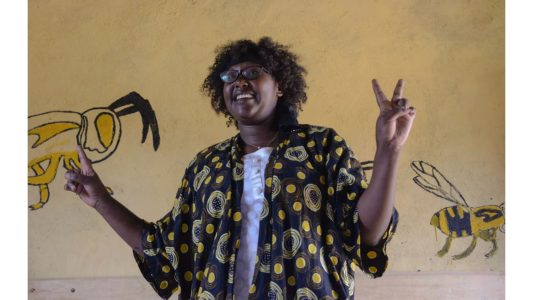
(Photo credit: Gioia Shah in The Guardian)
Nominated by Milka Chepkorir, Sengwer of Kabolet women’s group:
“The candidate is a young Indigenous Yaaku lady working on reviving their indigenous language and passing on indigenous knowledge. Being a young lady and dedicating herself to this noble role is an effort that needs recognition in a world where indigenous people’s efforts are not receiving the well deserved recognition”.
About Juliana:
Juliana, founder of the Yaaku Language and Culture Initiative, works under very challenging conditions marked by insecurity, limited financial resources, and cultural constraints. Despite these challenges, she has been able to initiate and lead impressive work with her elders on reviving the Iyaku language, which is facing extinction. Together with community members, Juliana has helped establish Indigenous language classes, develop written and spoken learning materials, and brought people together to learn the Iyaku language and culture.
With recent support through ILED, they have been able to successfully implement the Whispers of the Bees project where they pass on their precious knowledge on bees. Being a hunter-gatherer community, the Yaaku people have a lot of indigenous knowledge around bees, honey, wild animals and the relationships between the people and the resources on the land and forest. This relationship has resulted in significant conservation across many Indigenous People’s territories.
Reflections of the selection committee:
“Juli’s undertakings with a self-determined character at her young age are very captivating. She is convincingly a good choice and well deserving for the award”
“Saving a language and passing on traditional knowledge that are culturally and ecologically important is great work, and for such a young woman! She deserves this award!”.
7) Mrs. Peace Kakete (66)
KIgando Bulera community of Kibasi Parish Fort Portal (Uganda).
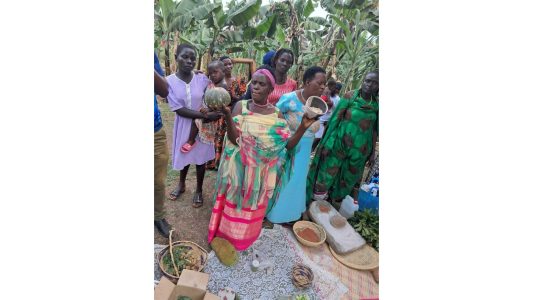
Nominated by Friends with Environment in Development, Uganda (FED):
“Peace is one of the indigenous women leaders in KIgando Bulera community of Kibasi Parish Fort Portal who work with Friends with Environment in Development (FED) to restore, keep and promote Batooro communities Indigenous Led Education in Kibasi – Fort Portal are of Kabarole District – Western Uganda. Her selfless character and personality makes her one of the best candidates for this Women Educator Award. Her consideration will encourage others more especially the young people to be of good humour to others and to work hard”.
About Peace:
Peace is an elderly and responsible lady with good leadership qualities. She has a voluntary and sacrificing heart and character. She is actively involved in the FED’s ILED supported project of sharing and passing on the indigenous knowledge in medicinal plants and medicinal foods to the young generations. She does everything possible for the good of others such as hosting the community meetings, which included hosting the Ogiek and Sengwer visit when they came to Uganda from Kenya. She was one of those in the group that visited the Ogiek in Nkareta. On coming back after she had visited the Herbarium at the Ogiek center, she persuaded her husband to offer part of their piece of land to the group to conserve natural vegetation on it and enrich it with more indigenous plants.
Reflections of the selection committee:
“Peace embodies wisdom and in abundance. In the African setting, it is not “normal” to have a women convincing her husband to offer a resource for collective community use. She is wise and humble, virtues that then contribute to her impressive influence on traditional medicine and passing on the same knowledge”.
“We were moved by Peace’s story of leadership and commitment. Her dedication to keeping essential knowledge alive for her community and future generations should be recognized. Honoring her is celebrating her devotion and the value of what she shares”.